

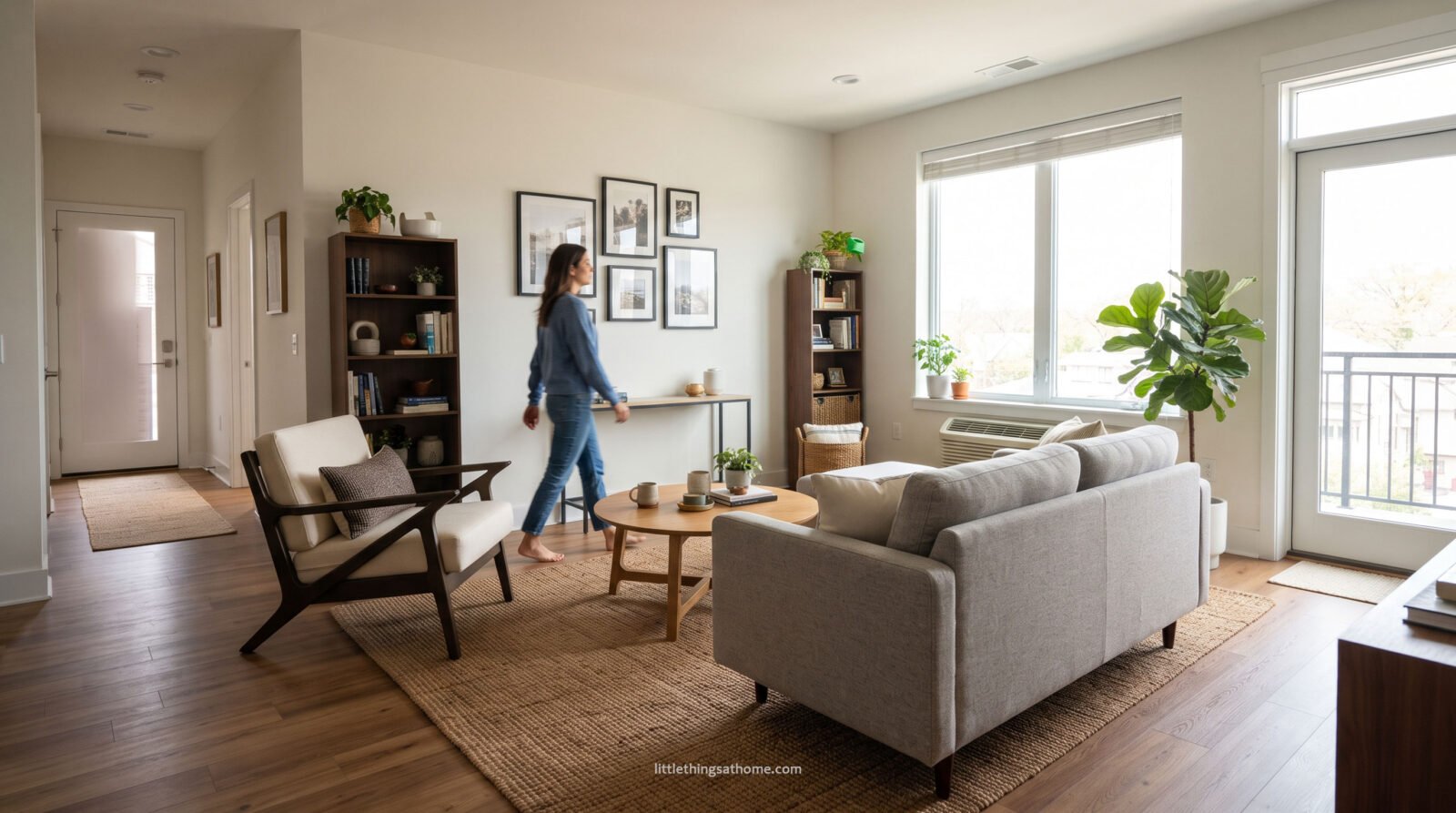

A small living room can still feel open, comfortable, and full of personality. You don’t need a huge sofa, expensive furniture, or a complete renovation to create a space you’ll love spending time in.
The secret is making thoughtful choices about layout, lighting, furniture, and storage. A well-placed mirror, a lighter color palette, or a better furniture arrangement can change how a room feels without adding more square footage.
Whether you’re decorating a small apartment, working with an awkward layout, or simply trying to make your living room feel less crowded, these 15 small living room ideas can help you create a space that feels more spacious and inviting.
**Affiliate Disclosure:** Little Things at Home participates in the Amazon Services LLC Associates Program, an affiliate advertising program designed to provide a means for websites to earn advertising fees by advertising and linking to Amazon.com. As an Amazon Associate, I earn from qualifying purchases. This means I may earn a commission when you purchase through links on this website, at no additional cost to you.
1. Choose Furniture That Fits the Room
One oversized sofa can make a small living room feel crowded before you add anything else.
Instead of choosing furniture based on appearance alone, consider its proportions in relation to the room. A compact sofa, a slim armchair, or a narrow coffee table can provide the comfort you need without overwhelming the available space.
Furniture with raised legs can also make a room feel visually lighter because more of the floor remains visible.
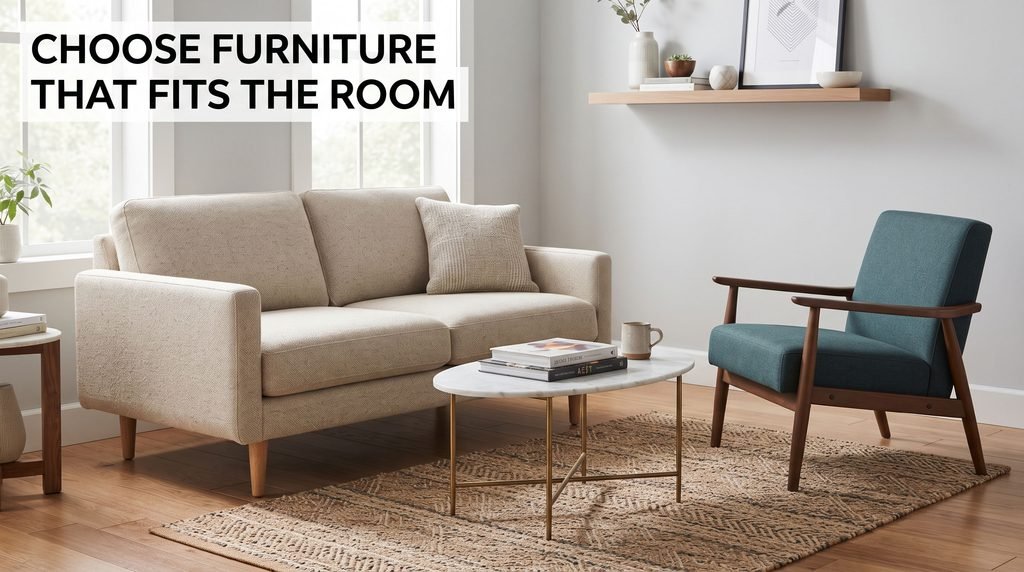
Try this: Measure your room and the furniture before buying anything new. Leave enough space to walk comfortably between the sofa, coffee table, and other seating.
2. Arrange Furniture to Improve the Flow
A small living room can feel cramped even when it doesn’t contain much furniture. Sometimes, the real problem is how everything is arranged.
Start by identifying the natural walking paths through the room. Make sure people can move between the entrance, sofa, windows, and other areas without constantly navigating around furniture.
Avoid pushing every piece against the wall automatically. Depending on the layout, bringing the sofa slightly forward or repositioning a chair can create a more balanced arrangement.
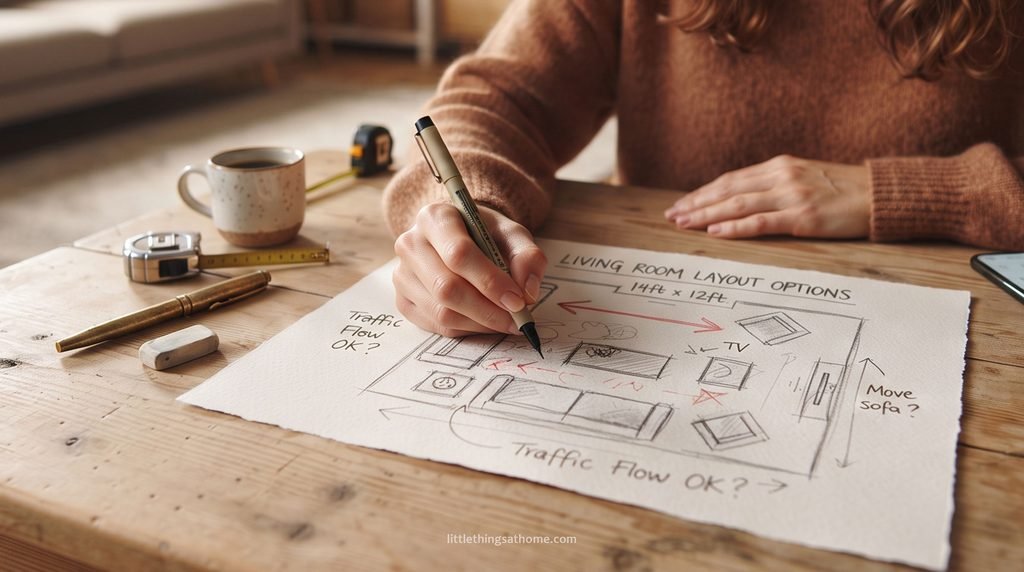
Try this: Sketch a simple floor plan before moving heavy furniture. Experiment with a few layouts to see which one creates the clearest walking paths.
3. Use Light Colors to Open Up the Space
Light colors can help a small living room feel brighter and more open, particularly when the room receives plenty of natural light.
White, warm beige, soft gray, and muted neutral tones work well on walls and larger furniture pieces. You can introduce contrast through cushions, artwork, plants, and smaller decorative objects.
A light color palette doesn’t have to feel plain. Combining different textures, such as linen, wood, cotton, and woven materials, adds depth without creating visual clutter.

Try this: Choose two or three main colors and repeat them throughout the room to create a cohesive look.
4. Let Natural Light In
Natural light can make a small living room feel more welcoming and less enclosed.
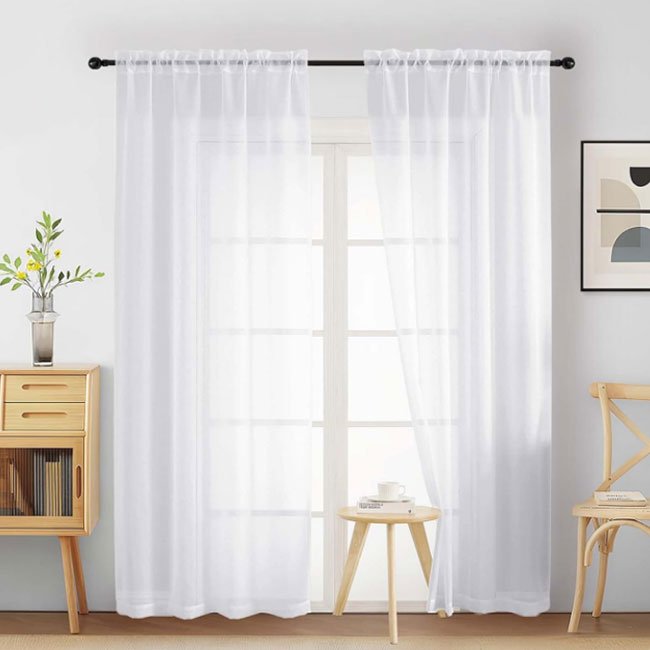
Keep windows as unobstructed as possible, and consider lightweight curtains that allow daylight to filter into the room. If privacy is important, choose a fabric that balances light transmission with coverage.
Avoid placing tall furniture directly in front of a window when a different arrangement is practical.
Try this: Replace heavy, dark curtains with light-filtering panels in a color that complements your walls.
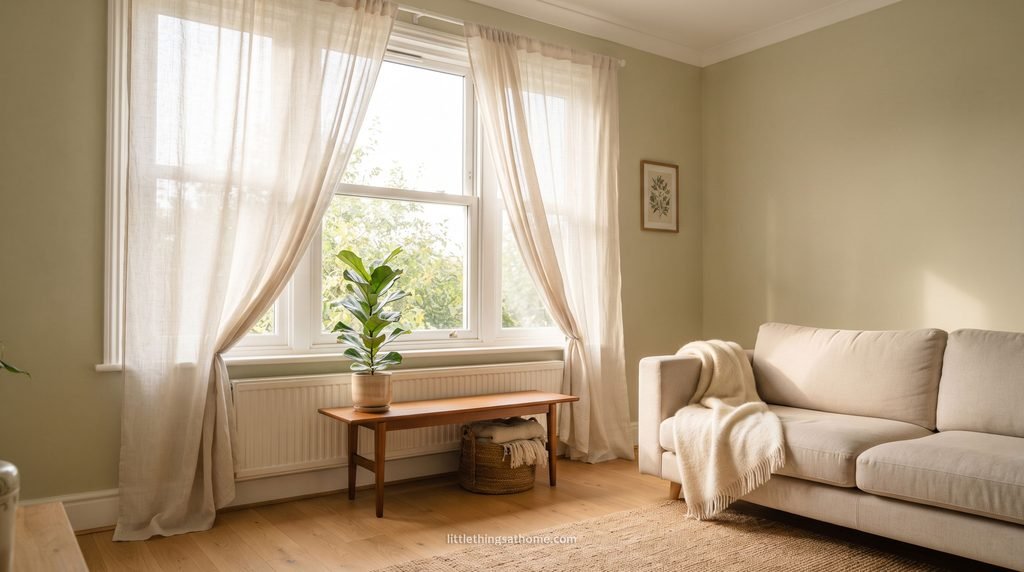
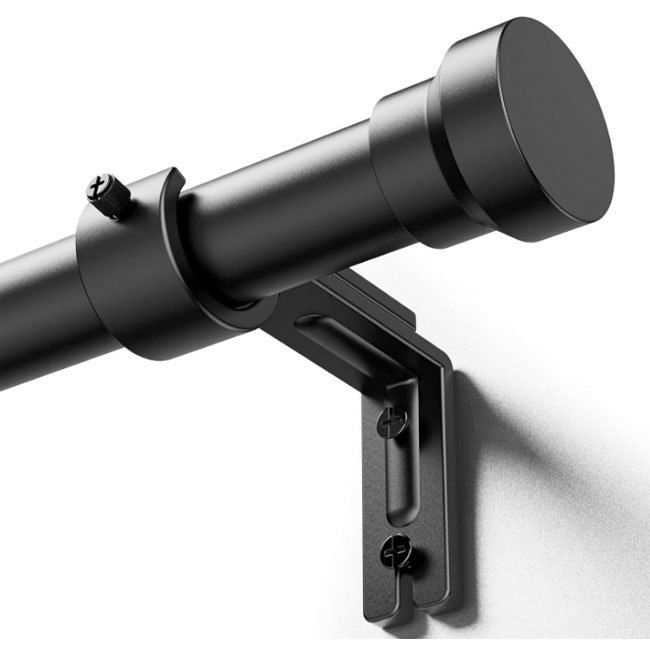
Amazon Finds: Light-filtering curtains and simple curtain rods.

5. Add a Mirror to Reflect Light
A strategically placed mirror can create the impression of greater depth and reflect light around the room.
A large wall mirror positioned opposite or beside a window can make a particularly useful design feature. If you prefer something smaller, a simple decorative mirror above a console table can have a similar visual effect on a more modest scale.
Choose a frame that suits your existing decor so the mirror feels like part of the room rather than an afterthought.
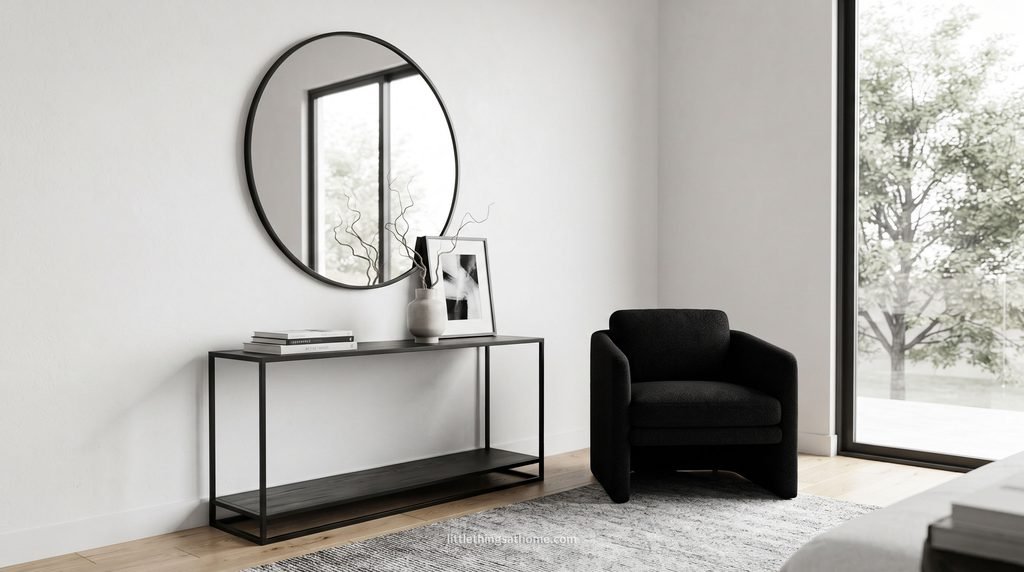
Try this: Before hanging a mirror, check what it will reflect. A view of a window, artwork, or an attractive part of the room is usually more appealing than a cluttered corner.
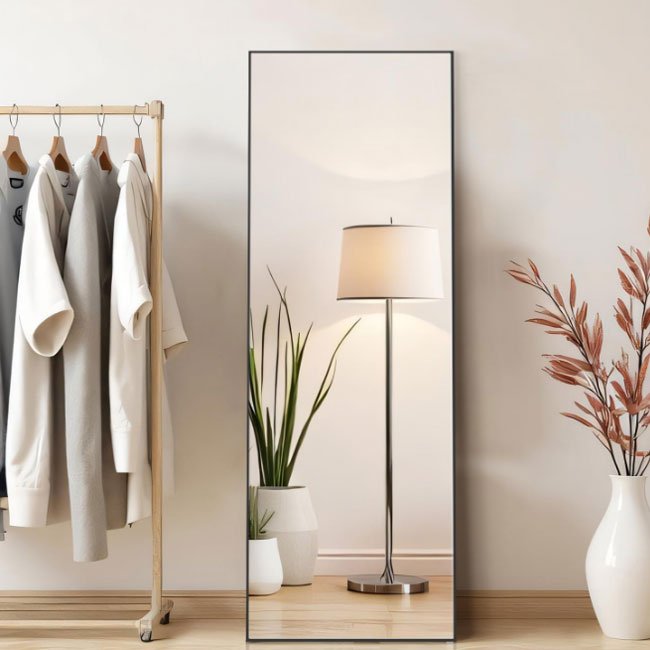
Amazon Finds: Full-length mirrors and minimalist wall mirrors.
6. Choose a Coffee Table With a Smaller Footprint
A bulky coffee table can take up valuable space in front of the sofa.
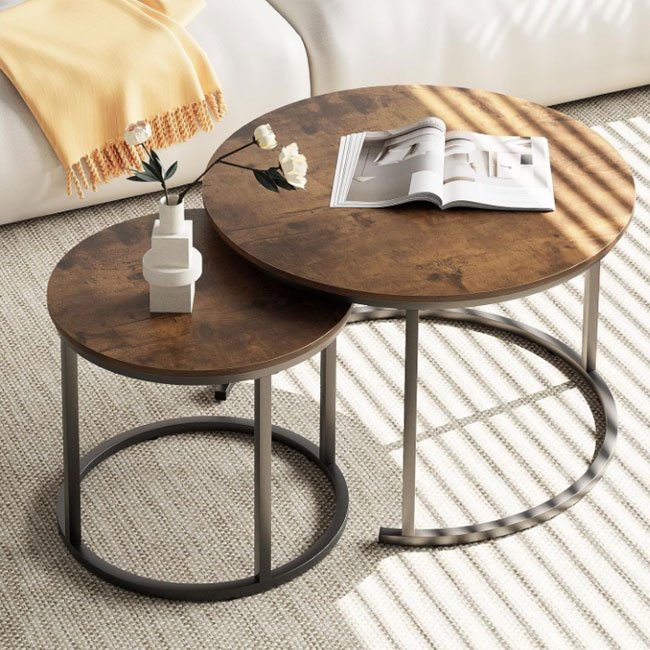
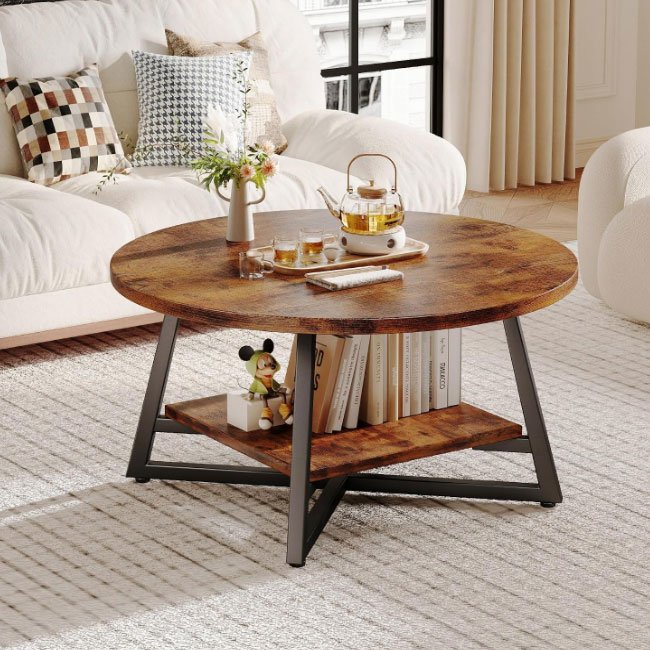
Consider a round table, a narrow rectangular design, or a pair of nesting tables that can be separated when you need extra surface area. Glass or visually open designs may also feel less imposing than a large, solid block of furniture.
The right choice depends on how you use the room. If you regularly eat, work, or play games at your coffee table, make sure the surface is still practical.
Try this: Leave enough room to move comfortably between the sofa and table. Measure the available space before choosing a replacement.
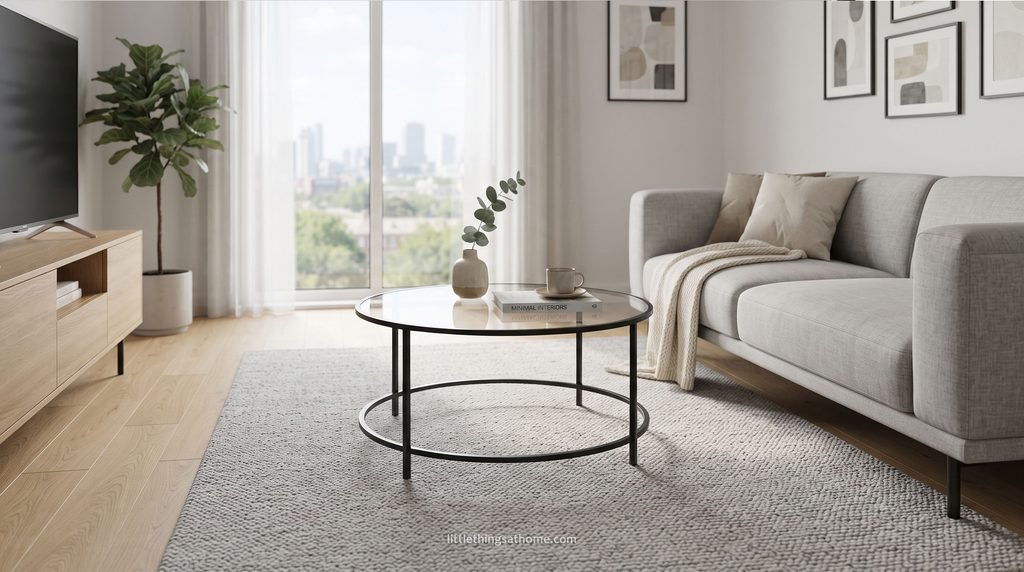
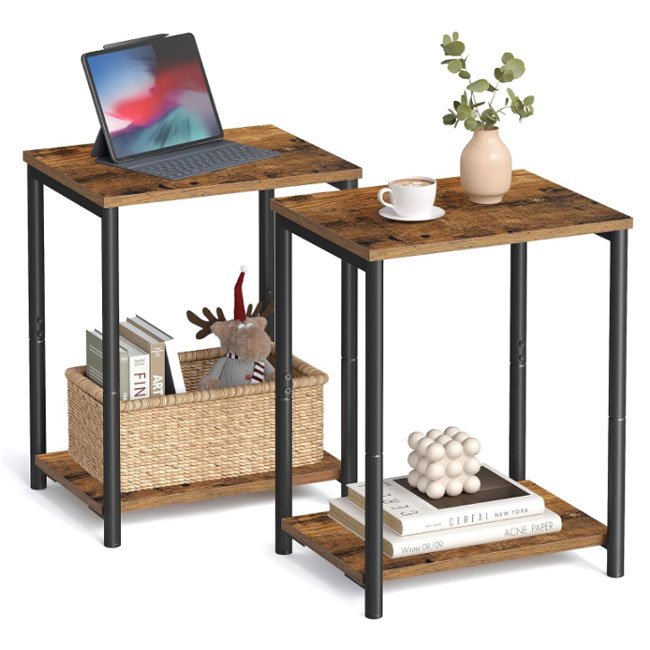
Worth exploring: Nesting coffee tables, compact side tables, and small round coffee tables.
7. Use Vertical Space for Storage
When floor space is limited, your walls can provide valuable storage and display opportunities.
Floating shelves, tall bookcases, and wall-mounted cabinets can hold books, plants, framed pictures, and everyday objects without requiring additional floor space.
However, more shelves don’t automatically mean better organization. Overfilled walls can make a small living room feel busy.
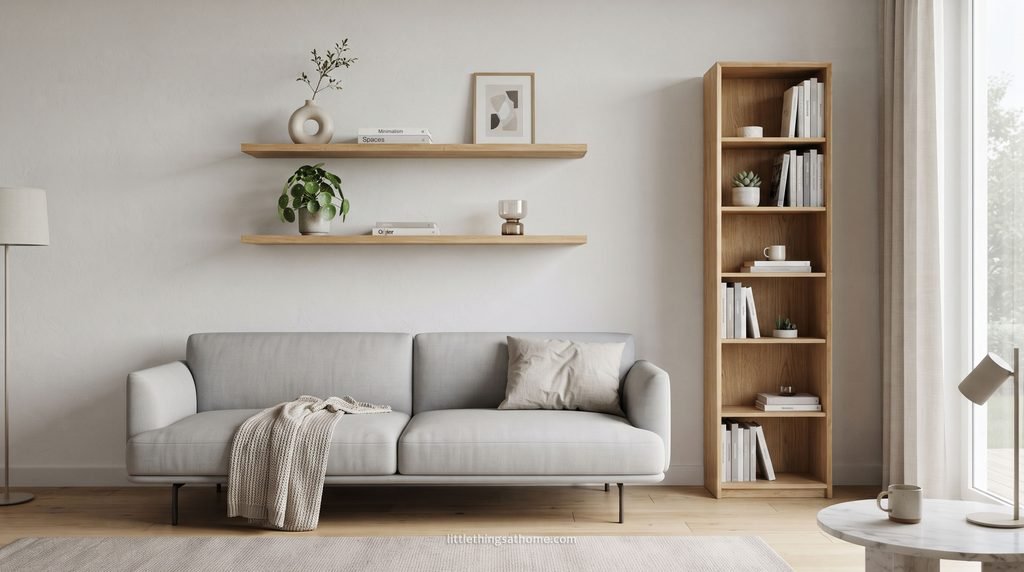
Try this: Use a few carefully placed shelves and leave some empty space between objects to keep the arrangement visually balanced.
8. Add a Rug That Defines the Seating Area
A rug can help bring a small living room together by visually connecting the sofa, chairs, and coffee table.
A rug that’s too small may make the furniture arrangement feel fragmented. Choose a size that works with your seating layout, ideally allowing at least the front legs of the main seating pieces to rest on it when practical.
Neutral rugs can create a calm foundation, while subtle patterns introduce personality without overwhelming the room.
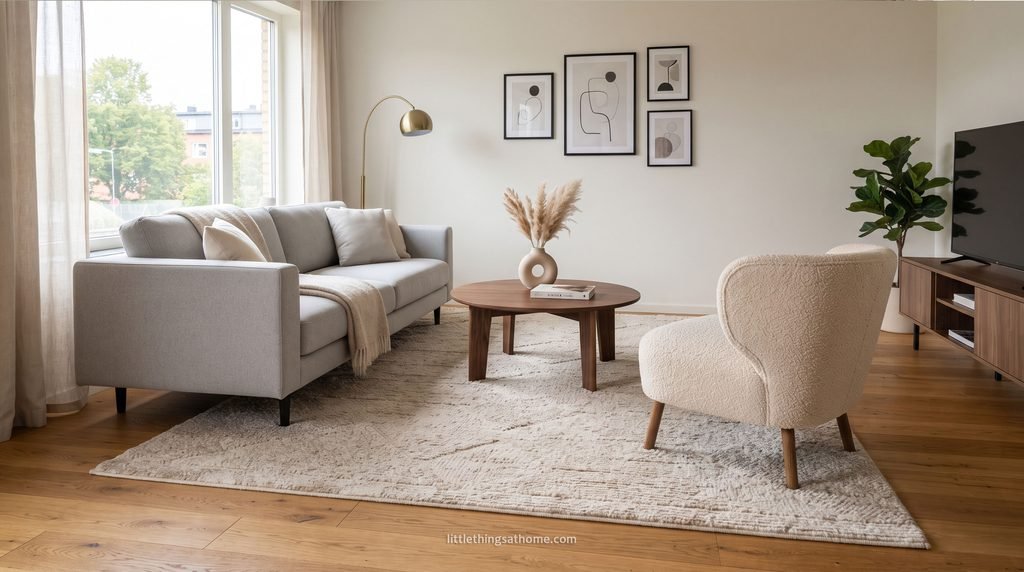
Try this: Measure the seating area before buying a rug. Consider how the rug will interact with doorways and other walking paths.
9. Use Lighting in More Than One Place
Relying on a single ceiling light can make a living room feel flat, especially in the evening.
Combining general lighting with a floor lamp, table lamp, or wall light creates a more layered atmosphere. Different light sources can make the room feel warmer and help distinguish the reading area from the main seating space.
You don’t need an elaborate lighting system. Even one well-placed lamp can make a noticeable difference.
Try this: Place a lamp beside the sofa or in a darker corner to make the room feel more balanced after sunset.
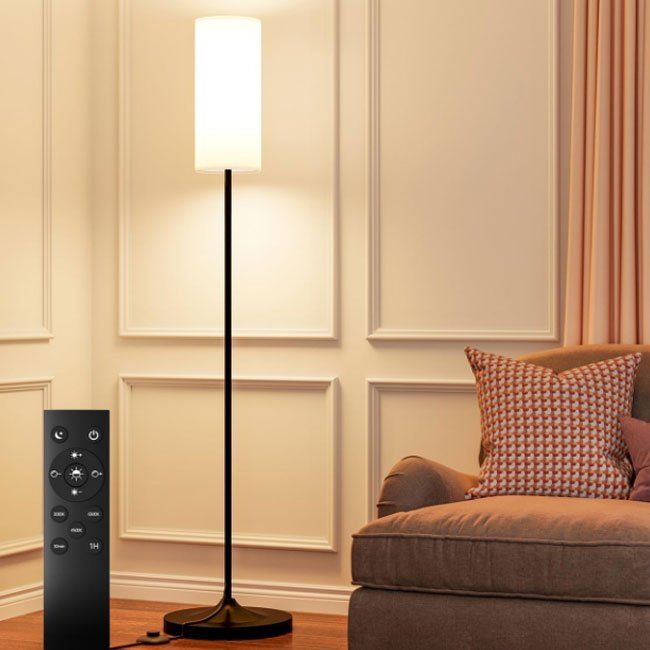
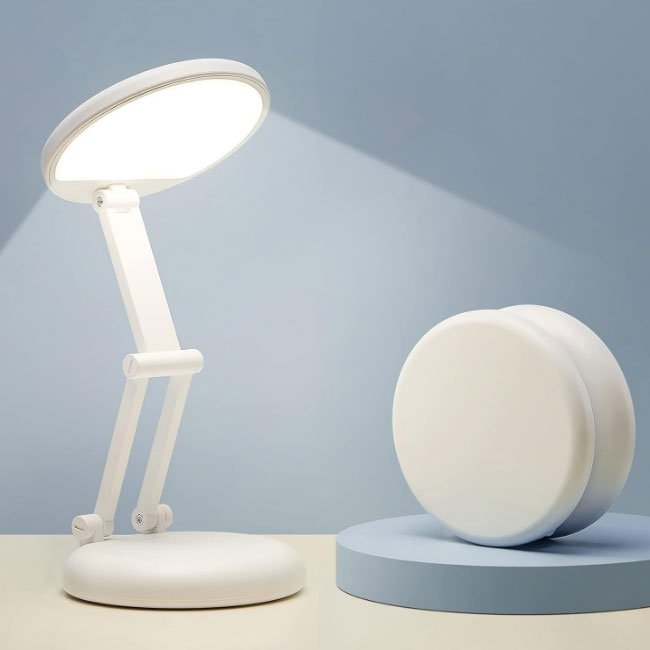
Worth exploring: Slim floor lamps and compact table lamps.
10. Keep Decorative Accessories Intentional
Decor makes a living room feel personal, but too many small objects can make limited space feel cluttered.
Instead of filling every surface, choose a few pieces you genuinely like. A ceramic vase, a framed print, a small plant, or a favorite stack of books can provide enough character without overwhelming the room.
Grouping objects on a tray can also make a coffee table or console feel more organized.
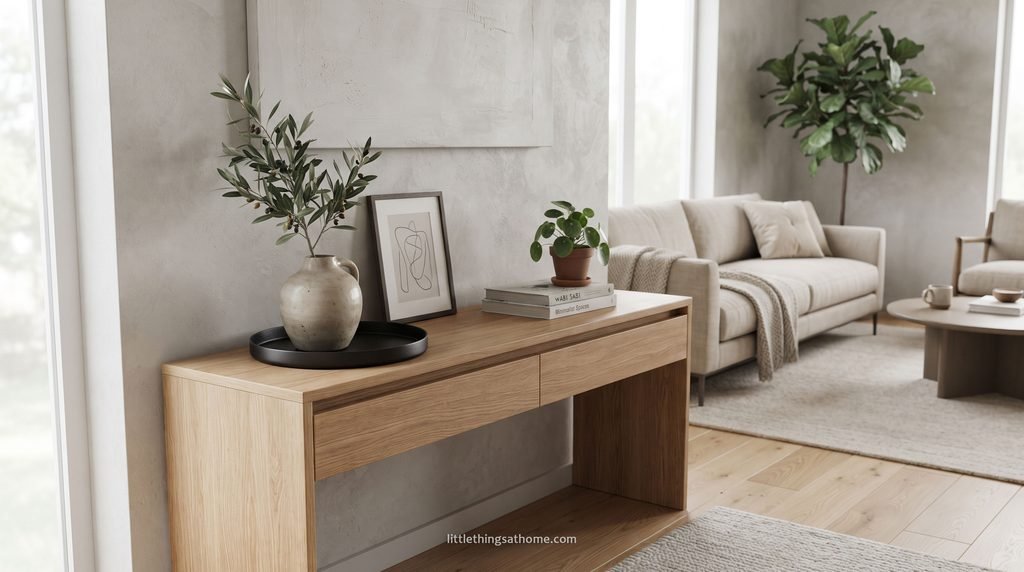
Try this: Remove everything from one surface, then put back only the items that serve a purpose or add something meaningful to the room.
11. Make Storage Part of the Furniture
A small living room often needs to serve several purposes. It might be a place to relax, entertain guests, play games, or work occasionally.
Furniture with built-in storage can help keep everyday belongings close without leaving them scattered around the room.
Consider an ottoman with a storage compartment, a coffee table with drawers, or a media console with closed cabinets.

Try this: Identify the items that regularly create clutter, then choose storage that suits those specific items instead of buying containers at random.
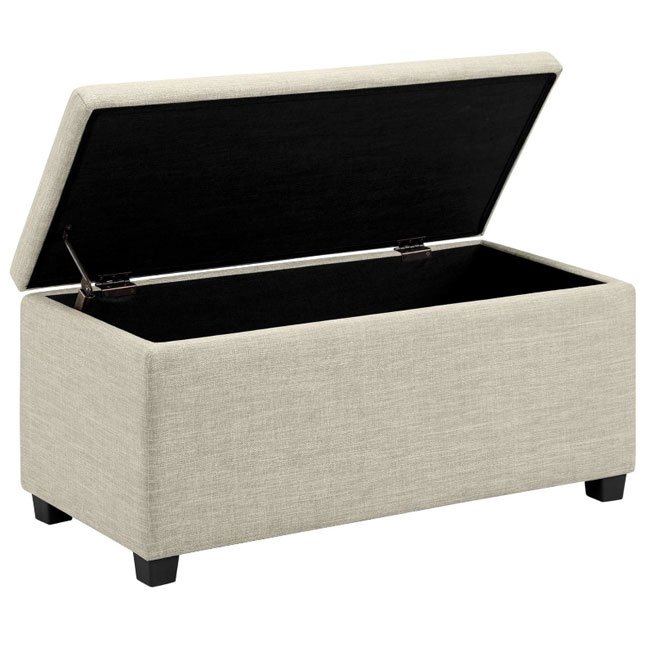
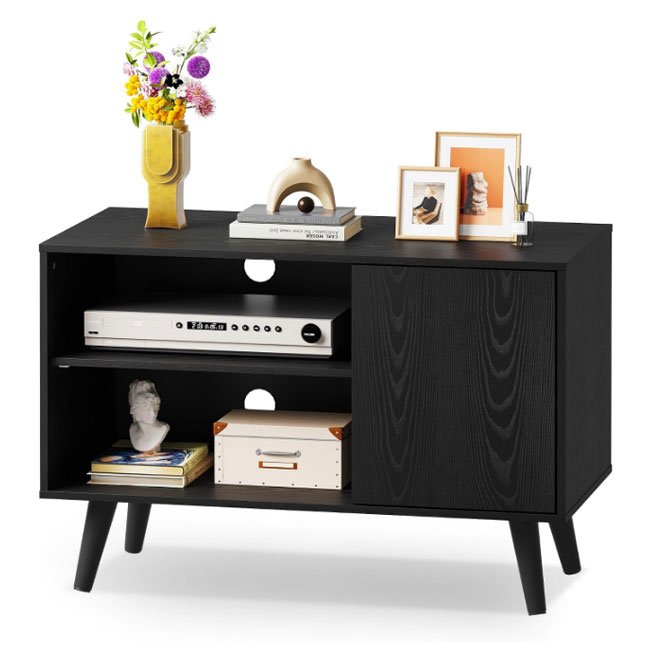
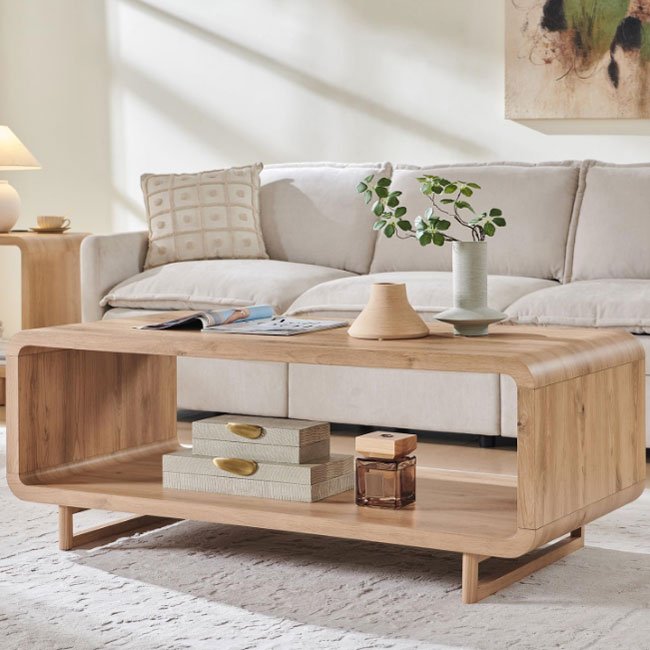
Amazon Finds: Storage ottomans, compact media consoles, and coffee tables with storage.
12. Leave Some Breathing Room
One of the most effective ways to make a small living room feel more spacious is to resist the urge to fill every corner.
Empty space isn’t wasted space. It helps define the furniture arrangement, keeps walking paths clear, and allows your favorite decorative pieces to stand out.
You may discover that removing an unnecessary side table or clearing a crowded shelf makes a bigger difference than buying another storage product.
Try this: Look at your living room from the entrance and identify one item you could remove, relocate, or store elsewhere.
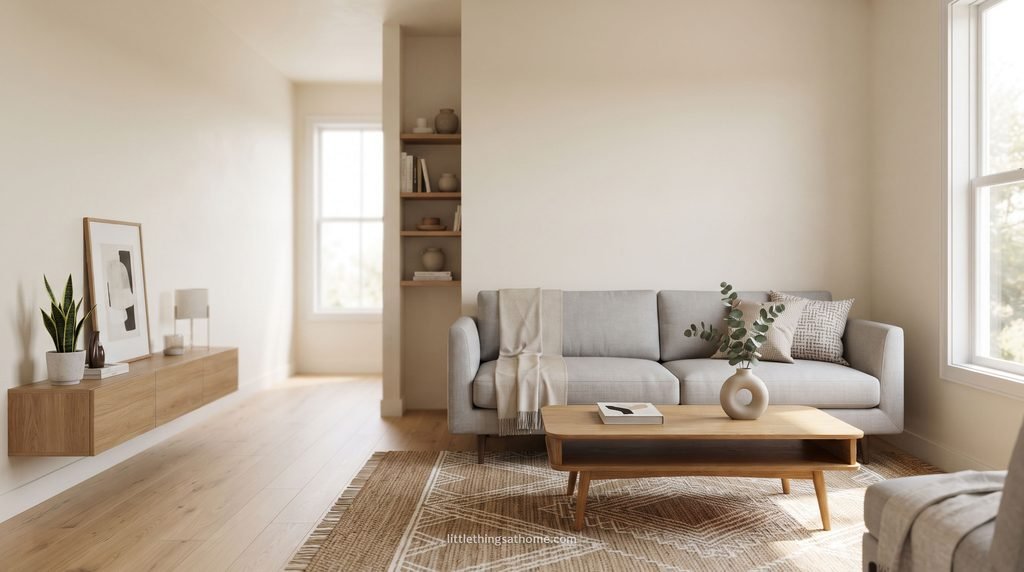
A room doesn’t have to be empty to feel spacious. It simply needs enough room for people to move and relax comfortably.
Make Your Small Living Room Work Better for You
A small living room can be practical and beautiful at the same time. The most effective changes often involve making better use of what you already have rather than replacing everything.
Start with your furniture layout, clear the main walking paths, and make the most of natural light. Then consider small improvements such as a mirror, a more suitable rug, layered lighting, or furniture that provides extra storage.
You don’t have to follow every idea on this list. Choose the changes that solve your biggest frustrations and suit the way you live.
The goal isn’t to make your living room look bigger at any cost. It’s to create a space that feels open enough to move around, comfortable enough to relax in, and personal enough to feel like home.
More Ideas for Your Home
Looking for more ways to make the most of your space? Explore these related guides:
- 15 Cozy Home Ideas That Make Any Space Feel Better
- 15 Small Bedroom Ideas That Make a Room Feel Bigger
- 10 Cozy Home Office Ideas for Small Spaces
- Simple Home Organization Ideas That Actually Help
Discover more ways to create a home that feels comfortable, functional, and thoughtfully put together.