

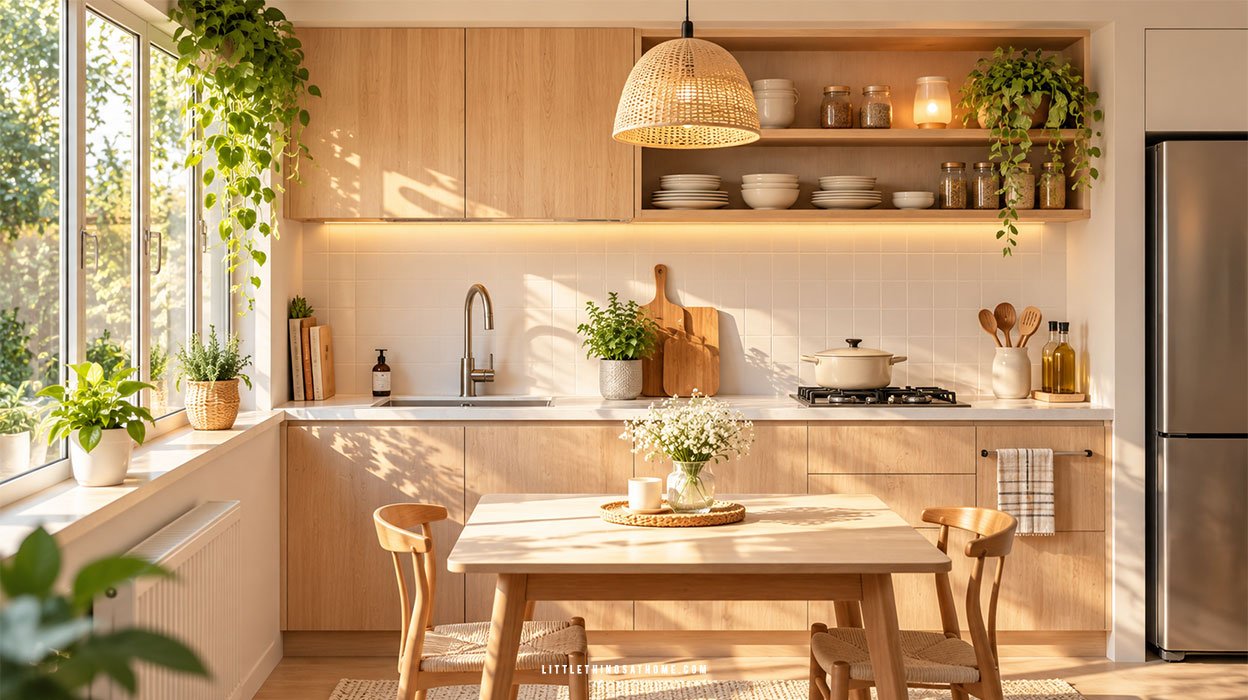

A small kitchen doesn’t necessarily need more cabinets, bigger countertops, or an expensive renovation. Sometimes, the biggest improvement comes from making better use of the space you already have.
If your countertops are constantly crowded, your cabinets are difficult to navigate, or you find yourself moving things around just to prepare a simple meal, you’re probably dealing with a storage problem rather than a lack of space.
The good news is that a more organized kitchen doesn’t have to involve complicated storage systems or dozens of expensive organizers.
With a few thoughtful adjustments, you can create a kitchen that feels more spacious, looks less cluttered, and makes everyday cooking a little easier.
Here are practical small kitchen organization ideas that can help you make better use of every corner.
1. Start by Clearing Your Kitchen Countertops
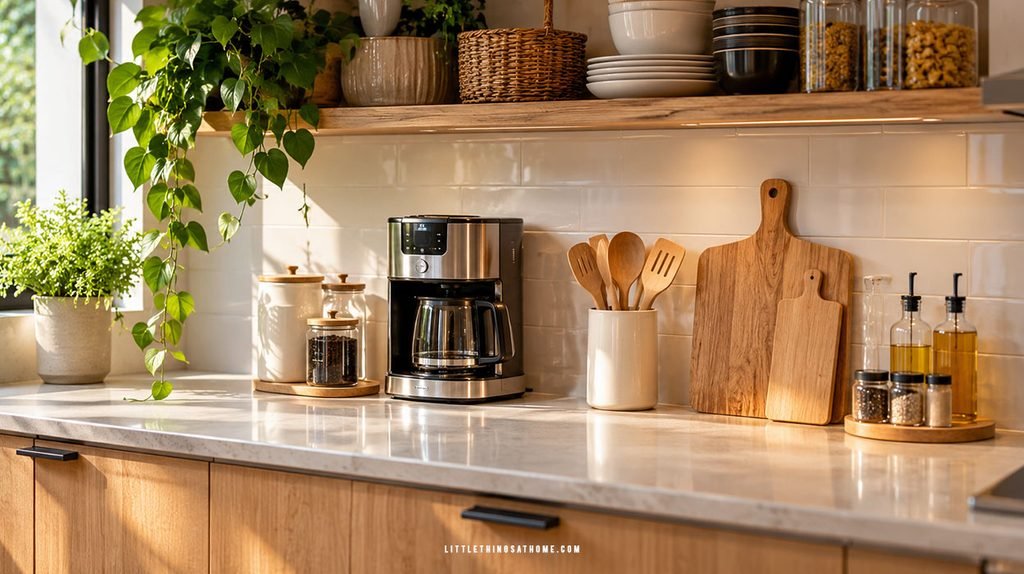
Before purchasing new organizers, take a closer look at what’s currently sitting on your countertops.
Small kitchens often feel crowded because too many everyday items are competing for the same limited surface area.
Appliances you rarely use, decorative containers, unopened mail, and miscellaneous kitchen accessories can quickly take over valuable preparation space.
Start by removing everything from your countertops. Then return only the items you regularly use.
For example:
- Keep your coffee maker if you use it every morning.
- Store occasional-use appliances inside a cabinet.
- Move cooking utensils into a drawer or dedicated holder.
- Keep frequently used ingredients together in one convenient area.
You don’t need completely empty countertops. The goal is to give every item a reason to be there.
A little breathing room can make even the smallest kitchen feel noticeably more comfortable.
2. Use Vertical Space Instead of Adding More Cabinets
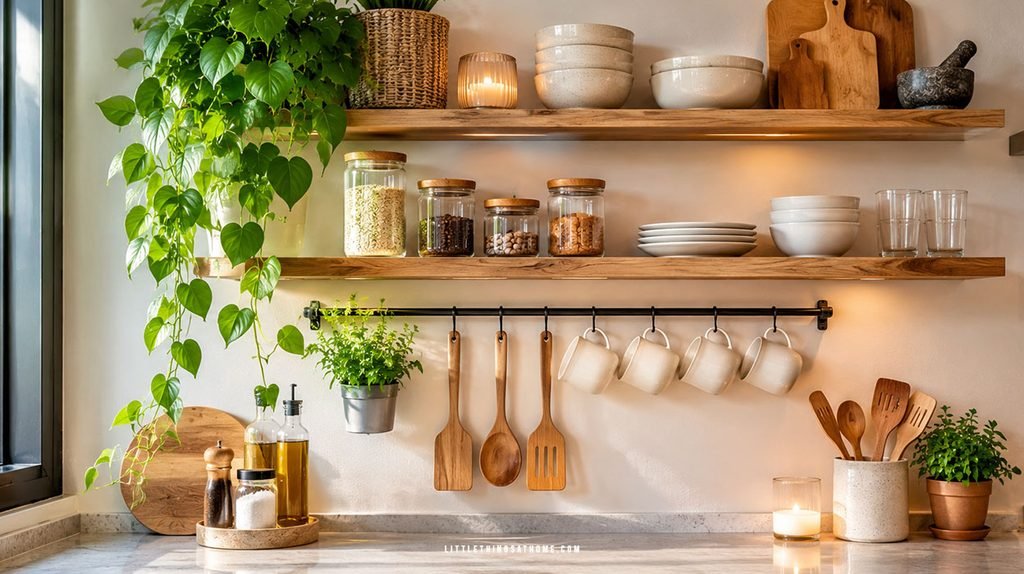
One of the most overlooked small kitchen storage ideas is making better use of vertical space.
When floor space and cabinet space are limited, your walls can provide additional storage without taking up valuable working areas.
Consider installing a few floating shelves, a wall-mounted utensil rack, or a simple rail with hooks.
These solutions work particularly well for lightweight kitchen essentials that you use regularly.
You could use a floating shelf for:
- Everyday mugs and drinking glasses.
- Small jars of frequently used ingredients.
- A few decorative kitchen accessories.
- Lightweight bowls and plates.
Try keeping the arrangement simple. Too many objects on open shelves can create visual clutter, which defeats the purpose of organizing your kitchen.
If you’re renting, consider removable storage solutions where appropriate, while checking the wall finish and product weight limits first.
3. Make the Side of Your Refrigerator Work Harder
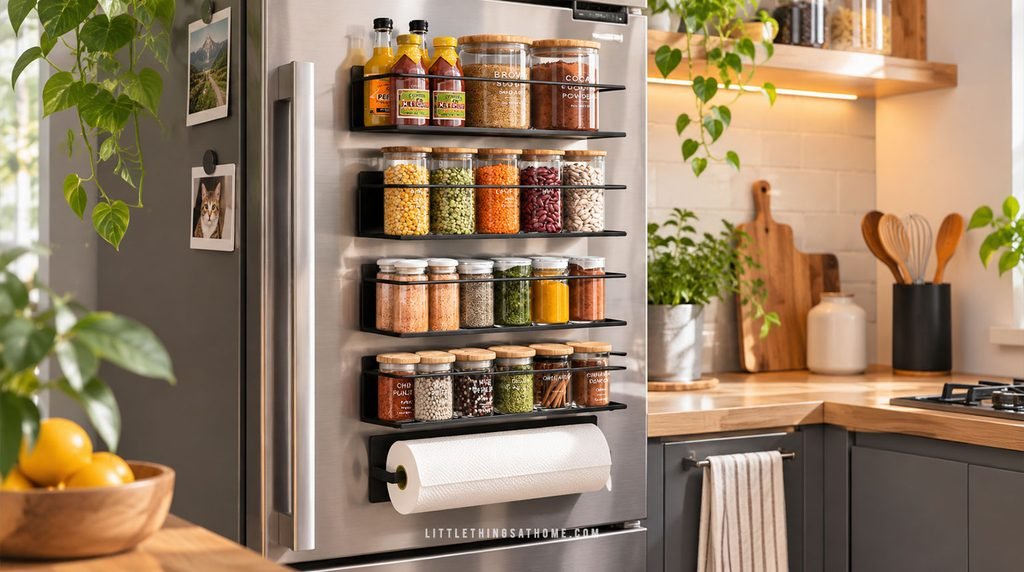
Your refrigerator is probably one of the largest surfaces in your kitchen, but its sides often remain completely unused.
If your refrigerator has a compatible magnetic metal surface, this area can become additional storage for items that would otherwise occupy your countertops or cabinets.
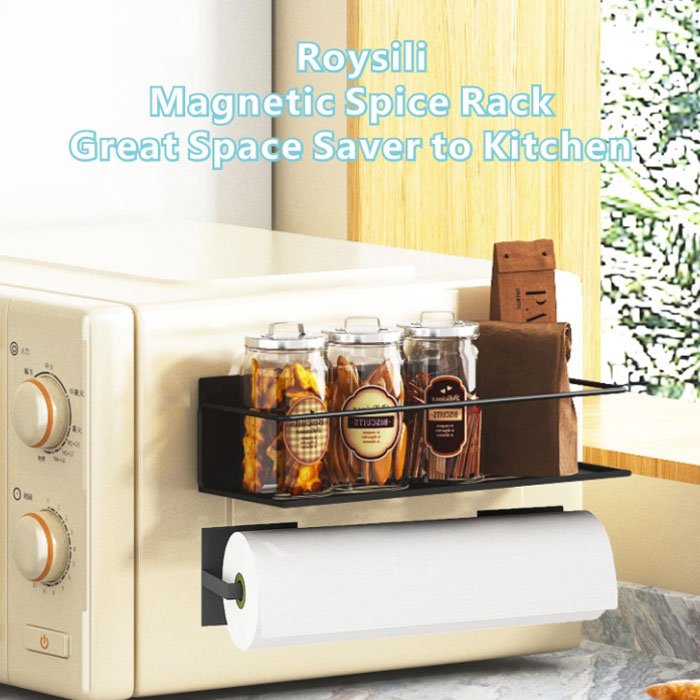
Magnetic organizers can hold lightweight spice containers, small kitchen accessories, and other frequently used essentials.
For example, a magnetic spice rack can keep your most-used seasonings within reach while freeing up space inside your kitchen cabinets.

Affiliate Disclosure: As an Amazon Associate, I earn from qualifying purchases. This means I may earn a commission if you purchase through links in this article, at no extra cost to you.
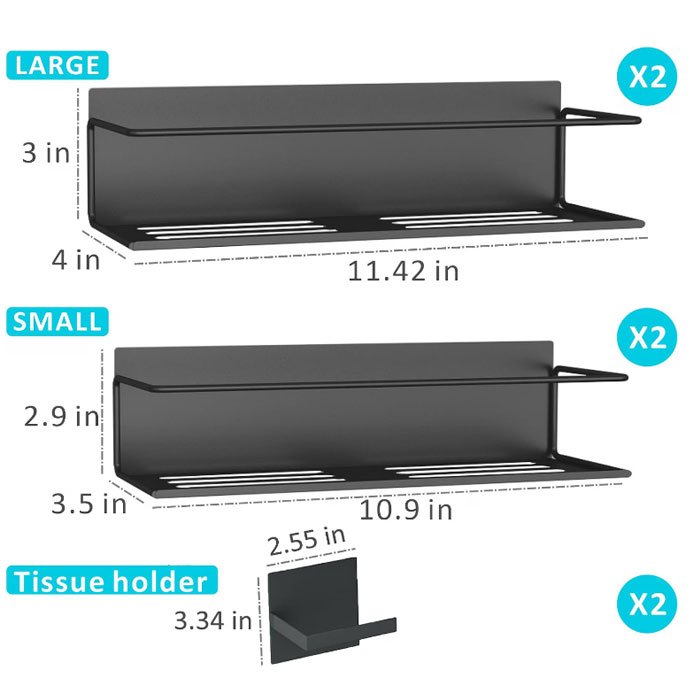
One option worth considering is the Roysili Magnetic Spice Rack for Refrigerator, which comes with four magnetic storage racks and two magnetic paper towel holders.
It’s designed to attach to compatible metal surfaces without drilling, making it a practical option for kitchens where permanent installation isn’t ideal.
Before purchasing, measure the available refrigerator space and check that your refrigerator’s surface is compatible with magnetic storage. Always follow the manufacturer’s weight limits and installation instructions.
4. Organize Your Cabinets by Everyday Use
A common kitchen organization mistake is arranging everything according to appearance rather than convenience.
Your most frequently used items should be the easiest to reach.
Instead of placing everything wherever it fits, organize your cabinets based on how you actually use your kitchen.
For example:
- Lower cabinets: Pots, pans, mixing bowls, and heavier cookware.
- Upper cabinets: Everyday glasses, plates, and lightweight kitchen items.
- Cooking area: Frequently used oils, seasonings, and utensils.
- Less accessible shelves: Occasional-use appliances and seasonal items.
This simple arrangement reduces unnecessary movement when preparing meals.
You can also group similar items together so you don’t have to search through several cabinets to find what you need.
The best kitchen organization system is one that makes everyday routines easier.
5. Use Shelf Risers to Create More Storage Inside Cabinets
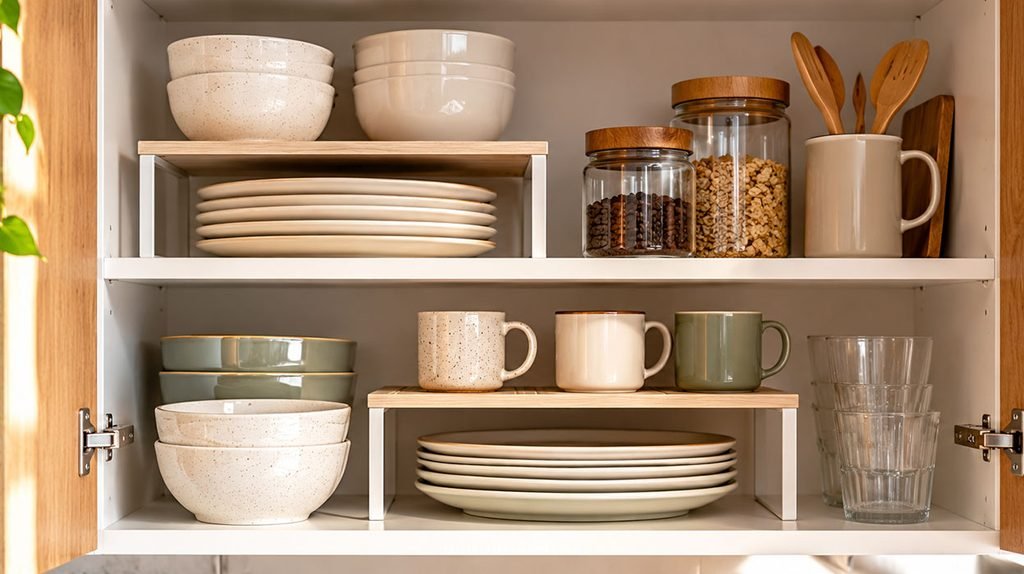
If your kitchen cabinets have a lot of unused vertical space, shelf risers can help you make better use of it.
Without additional levels, plates, bowls, and mugs often end up stacked on top of each other.
This makes it harder to reach items at the bottom and can leave plenty of unused space above them.
A shelf riser creates an additional storage level, allowing you to separate items and improve visibility.
They’re particularly useful for:
- Storing smaller plates above larger plates.
- Organizing coffee mugs.
- Separating bowls and food containers.
- Keeping frequently used dishes accessible.
Before choosing one, measure the cabinet’s width, depth, and available height.
You don’t need a large organizer. Sometimes, one simple shelf riser can make an overcrowded cabinet much easier to use.
6. Give Your Kitchen Drawers a Clear Purpose
Kitchen drawers can become surprisingly messy when different items are stored together.
One drawer might contain cooking utensils, batteries, random tools, measuring spoons, and things that don’t really belong in the kitchen.
Instead of trying to fit everything into one drawer, give each drawer a specific purpose.
For example:
- One drawer for everyday cooking utensils.
- One drawer for cutlery.
- One drawer for food storage accessories.
- One drawer for kitchen towels and small household essentials.
Drawer dividers can help keep everything in its place.
If you have deep drawers, use adjustable organizers to separate larger utensils from smaller accessories.
The idea is to make it easy to find what you need without having to empty the entire drawer.
7. Create a Small Coffee or Breakfast Station

If your kitchen counter is constantly occupied by coffee supplies, mugs, breakfast ingredients, and small appliances, consider creating a dedicated coffee or breakfast station.
You don’t need an entire countertop for this.
Choose one small area and keep everything related to your morning routine together.
You might include:
- A coffee maker or kettle.
- A few everyday mugs.
- Coffee, tea, or other morning essentials.
- A small tray to group loose items.
- A compact container for frequently used supplies.
If countertop space is extremely limited, consider moving some supplies to a nearby cabinet or using a narrow shelf.
Keeping similar items together helps reduce clutter and makes your morning routine feel more organized.
8. Use the Space Under Your Kitchen Sink

The area beneath the kitchen sink is often one of the most difficult places to organize because plumbing pipes take up valuable room.
However, that doesn’t mean the entire cabinet needs to become unusable.
Start by removing everything and grouping your cleaning supplies by category.
Keep frequently used items toward the front and less frequently used supplies toward the back.
A compact under-sink organizer can help create additional levels, while small bins can separate cleaning cloths, dishwasher supplies, and other essentials.
Pay attention to the location of pipes before purchasing any organizer. Measure the available space carefully so the storage system fits around your plumbing.
It’s also worth checking the cabinet periodically for leaks or moisture before storing household supplies inside.
9. Make Better Use of the Space Above Your Cabinets
If your kitchen cabinets don’t reach the ceiling, the space above them can become useful for items you don’t need every day.
Instead of letting this area collect random objects, use it intentionally.
A few matching storage baskets can help keep lightweight, occasionally used kitchen accessories organized.
This might include:
- Seasonal serving dishes.
- Extra kitchen linens.
- Special occasion accessories.
- Lightweight items you rarely need.
Choose containers that complement your kitchen rather than mixing too many different colors and materials.
One important consideration: Avoid storing heavy or frequently used items in high, difficult-to-reach areas. Keep anything you need regularly within comfortable reach.
10. Keep Your Most-Used Items Within Easy Reach
A well-organized kitchen should make cooking easier, not create extra steps.
Think about the items you reach for every day. Your favorite cooking spoon, cutting board, olive oil, and most-used seasonings should have convenient places.
You might keep a small utensil holder near your cooking area or place a few essential ingredients together on a compact tray.
However, avoid placing too many things beside the stove. Cooking oils, spices, and utensils should be stored appropriately, away from excessive heat and splashes.
A little planning can make your kitchen more functional without adding more furniture or storage products.
11. Choose Storage That Doesn’t Make Your Kitchen Look Crowded
Organization isn’t just about fitting more things into your kitchen. It’s also about creating a space that feels comfortable to use.
Too many baskets, containers, and organizers can make a small kitchen look even more crowded.
Instead, choose storage solutions that complement your existing kitchen design.
A few ideas:
- Use clear containers for pantry essentials so you can see what’s inside.
- Choose matching baskets for open shelving.
- Use neutral colors to create a more consistent appearance.
- Keep frequently used items accessible rather than hiding everything.
- Avoid buying organizers before identifying an actual storage problem.
Remember that every organizer takes up space too.
Before purchasing anything, consider whether it genuinely improves how you use your kitchen.
12. Create a Simple Kitchen Reset Routine
Even the most organized kitchen can become cluttered after a few busy days.
The secret to maintaining an organized kitchen isn’t constantly rearranging everything. It’s having a simple routine that prevents small messes from becoming bigger problems.
At the end of each day, spend a few minutes returning items to their designated places.
A simple kitchen reset might include:
- Clearing unnecessary items from countertops.
- Returning cooking utensils to their proper storage.
- Putting away clean dishes.
- Checking that frequently used ingredients are organized.
- Wiping down the main preparation area.
You don’t need to deep-clean your kitchen every evening.
A few consistent habits can make it much easier to maintain an organized space over time.
Final Thoughts: A More Functional Kitchen Starts With Better Organization
A small kitchen doesn’t have to feel crowded or difficult to work in.
The key is to make better use of the space you already have, prioritize the items you use most often, and avoid adding storage solutions without a clear purpose.
Start with your countertops, look for unused vertical space, organize your cabinets by everyday use, and make those overlooked areas work harder.
You don’t need to implement all twelve ideas at once.
Start with one area that’s giving you the most trouble. A few small improvements can gradually turn your kitchen into a more functional, comfortable, and enjoyable place to spend time.
Read more: