

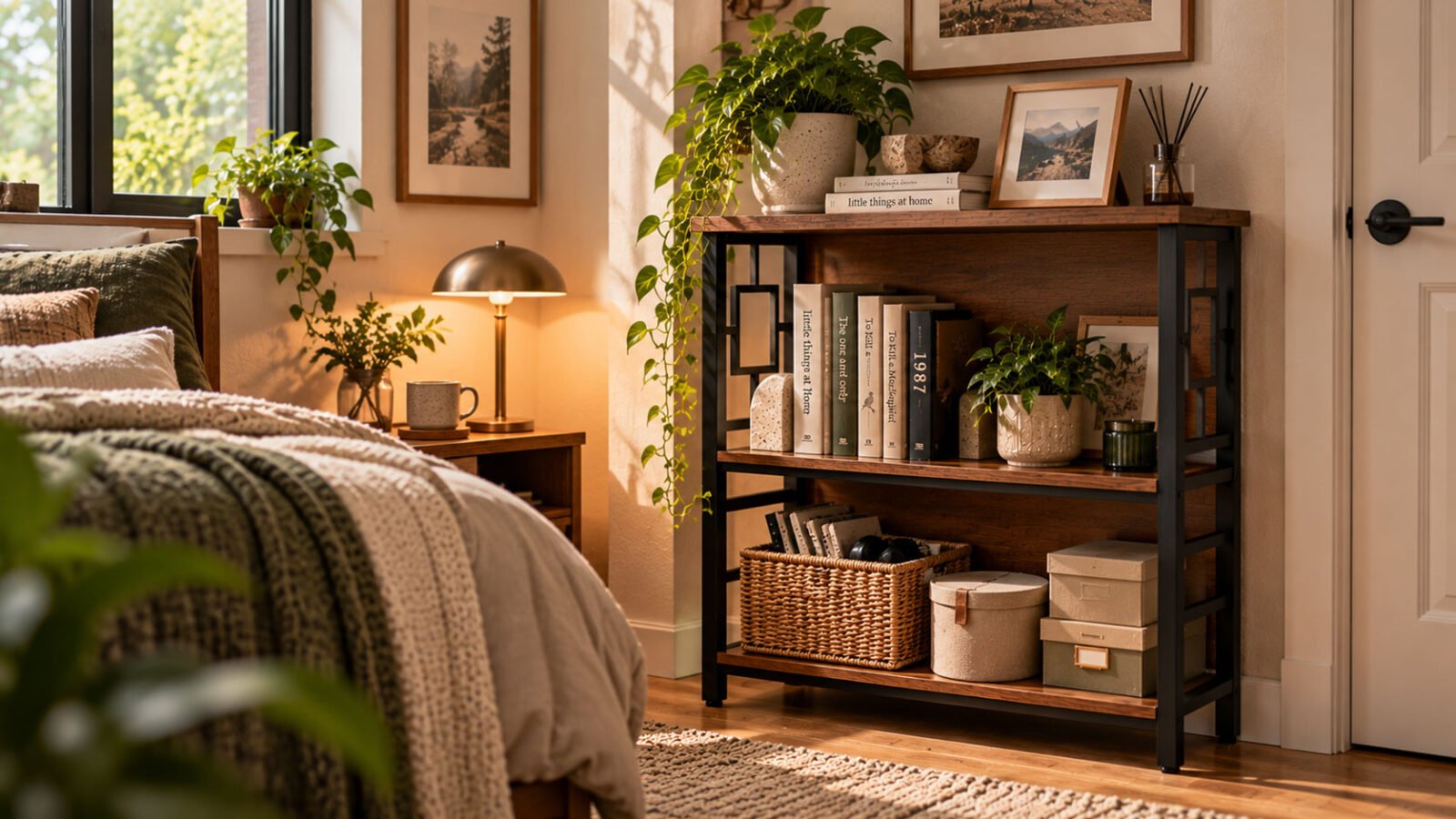

A bookshelf can do more than store your favorite books. With a little planning, it can become a practical part of your home decor, helping you organize everyday essentials while making a room feel more personal and inviting.
Whether you’re decorating a small apartment, setting up a home office, or creating a cozy reading corner, the right bookshelf arrangement can make a difference without taking up too much space.
The secret is finding a balance between storage and styling. Here are 12 small bookshelf styling ideas to help you create a space that feels organized, comfortable, and uniquely yours.
1. Mix Books with Decorative Objects
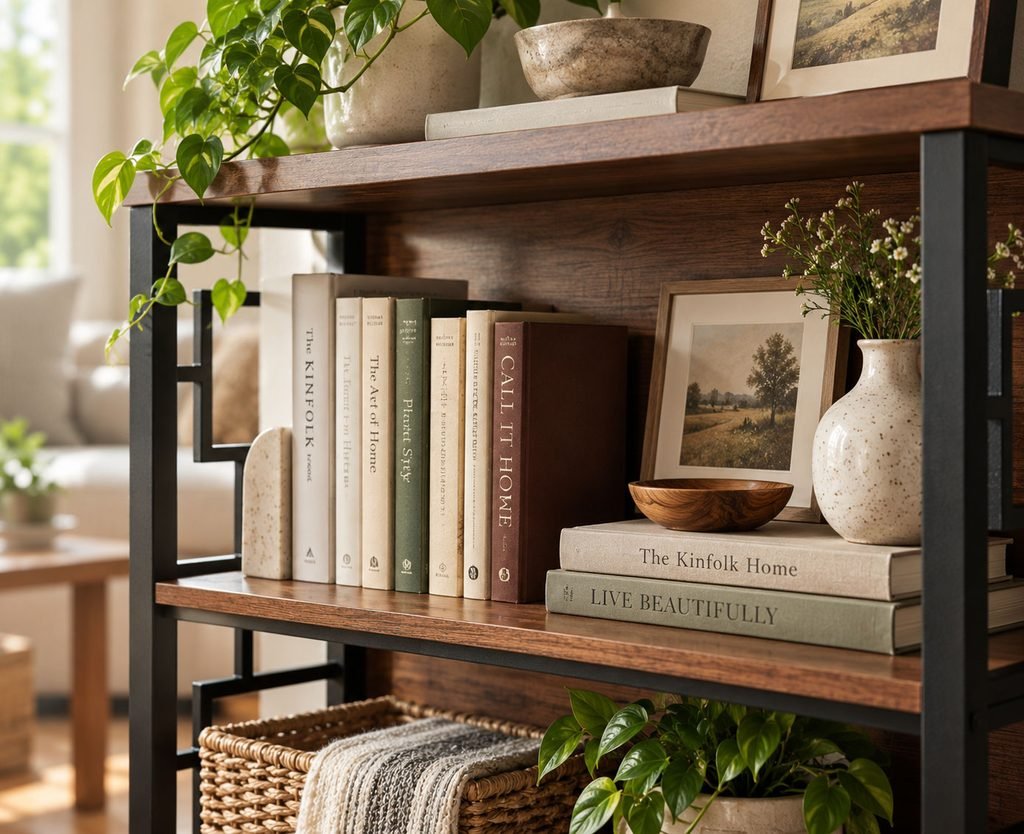
One of the easiest ways to style a bookshelf is to combine books with a few decorative pieces.
Arrange some books vertically and stack a small selection horizontally. Then add a ceramic vase, a small framed print, or a favorite decorative object.
This creates variety without making the shelves feel overcrowded.
Try to leave a little breathing room between groups of objects. An organized arrangement often looks more inviting than filling every available inch.
2. Add Small Plants for a Natural Touch
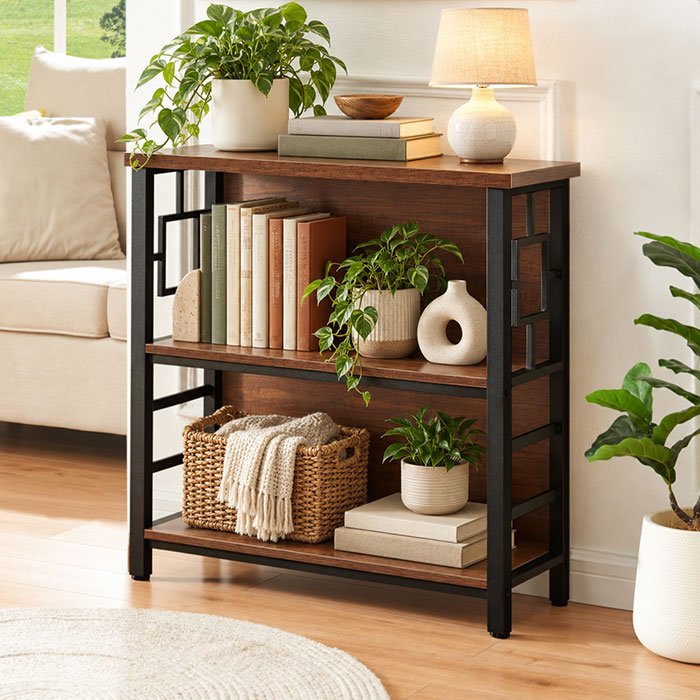
Greenery can make a bookshelf feel softer and more relaxed.
Place a small potted plant on an open shelf, or use a trailing plant on a sturdy upper shelf where it can hang naturally without obstructing anything below.
If your bookshelf sits away from natural light, choose a suitable low-light plant or a realistic artificial alternative.
Keep plant pots stable and protect the shelf surface from moisture.
3. Use Woven Baskets to Hide Everyday Clutter
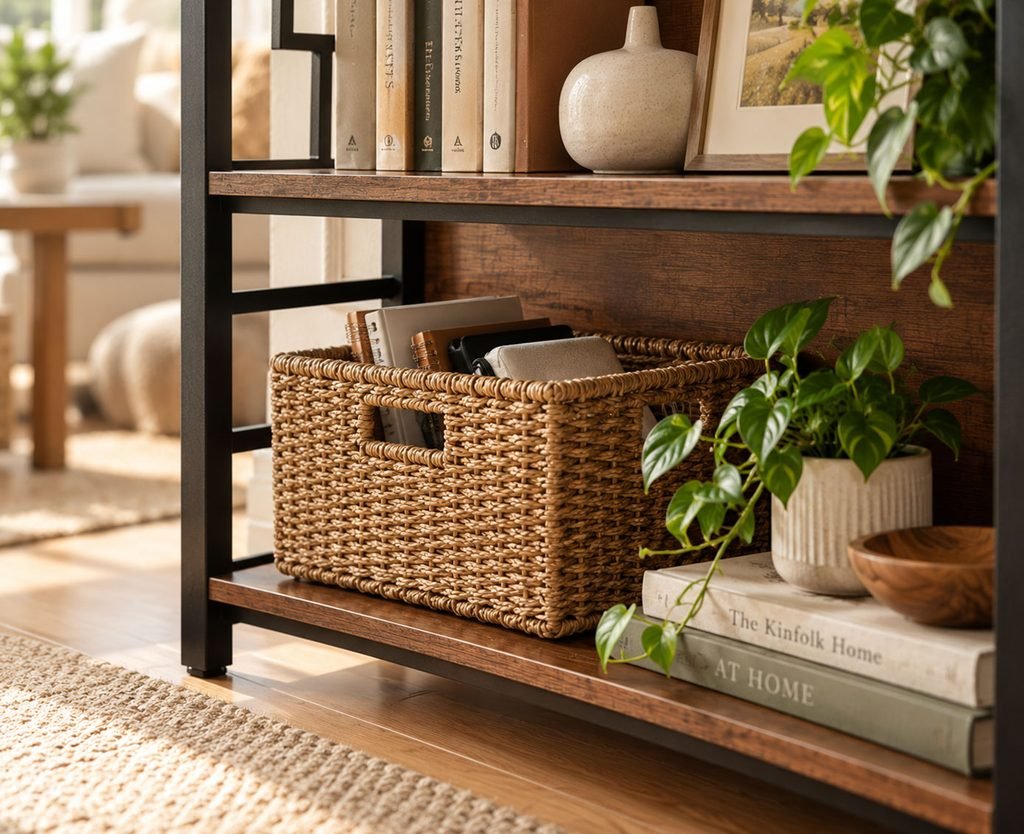
Not everything on a bookshelf needs to be on display.
Small woven baskets or fabric storage bins can hold cables, notebooks, stationery, remote controls, and other everyday items that might otherwise make a room look messy.
Choose baskets that fit comfortably within the shelf dimensions. Matching baskets can create a coordinated look, while different natural textures can add a little variety.
This idea is especially useful for home offices, bedrooms, and shared living spaces.
4. Choose a Bookshelf with an Open Metal Frame
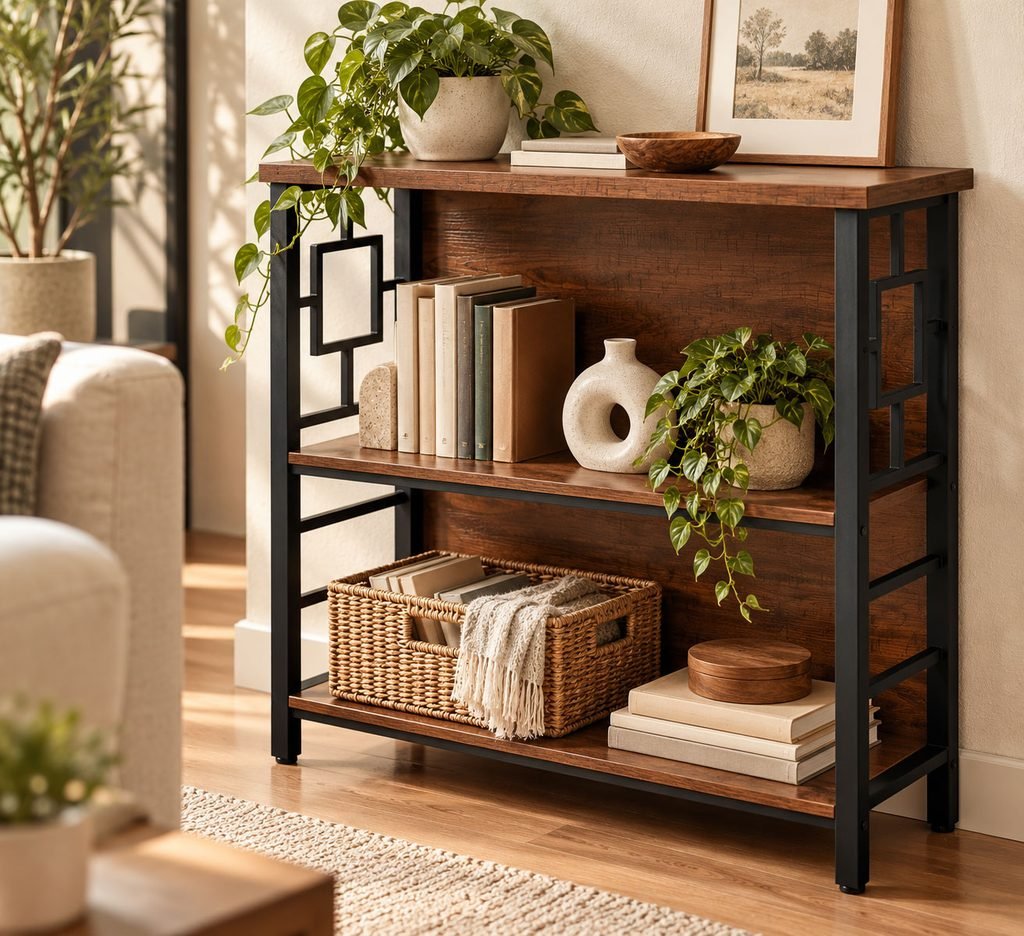
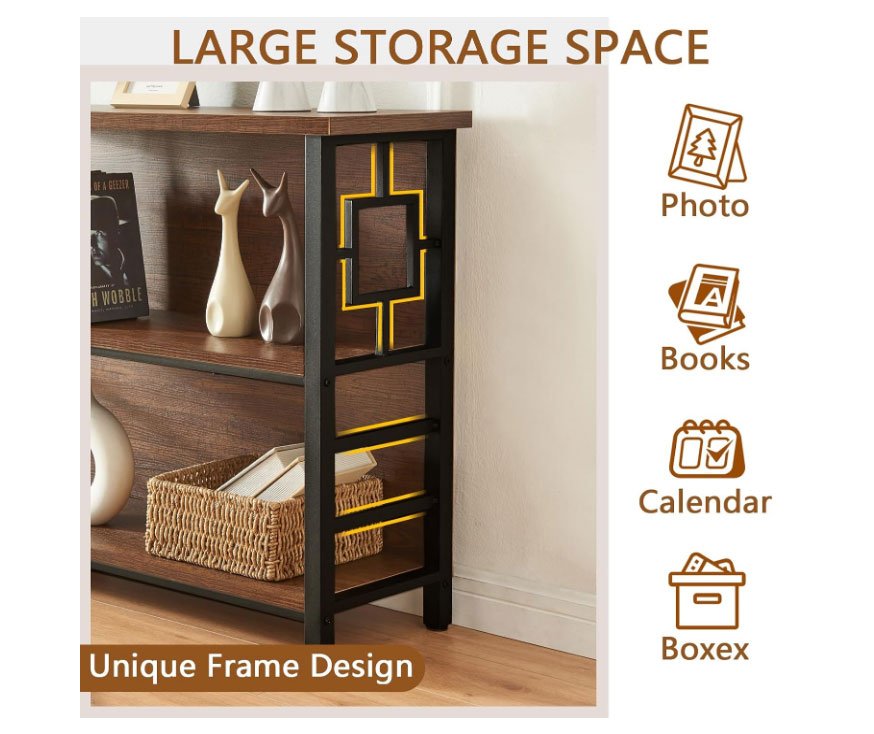
A bookshelf with an open metal frame can work well in modern, industrial, and rustic-inspired interiors.
The open structure lets you see more of the wall behind it, which may help the arrangement feel visually lighter than a bulky, enclosed cabinet.
The HOMISSUE three-tier bookshelf is one option to consider. Its rustic brown shelves and geometric metal frame offer a combination of warm wood tones and dark structural lines.
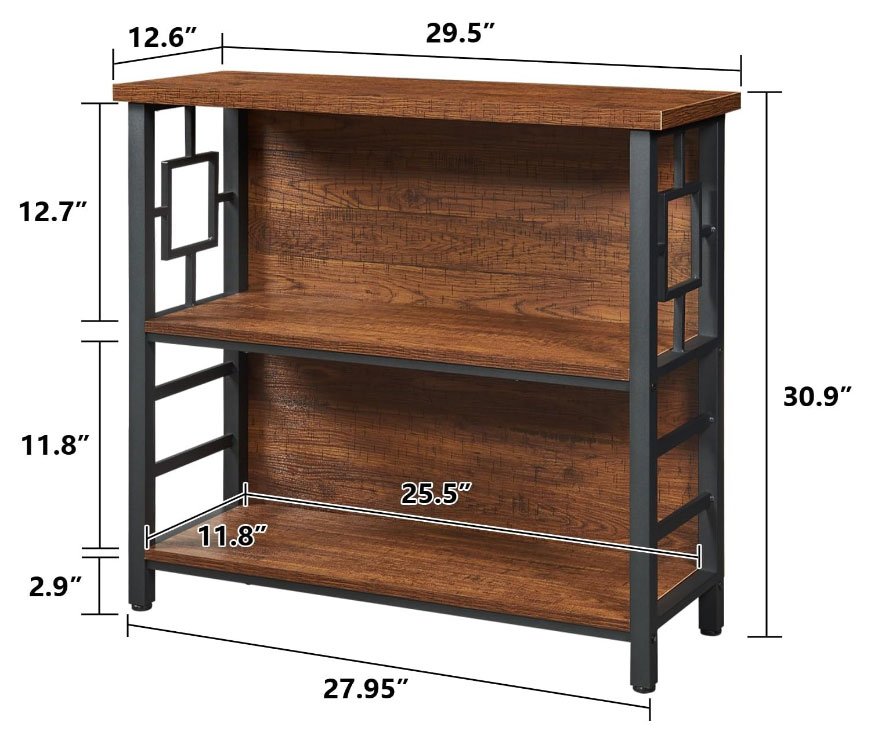
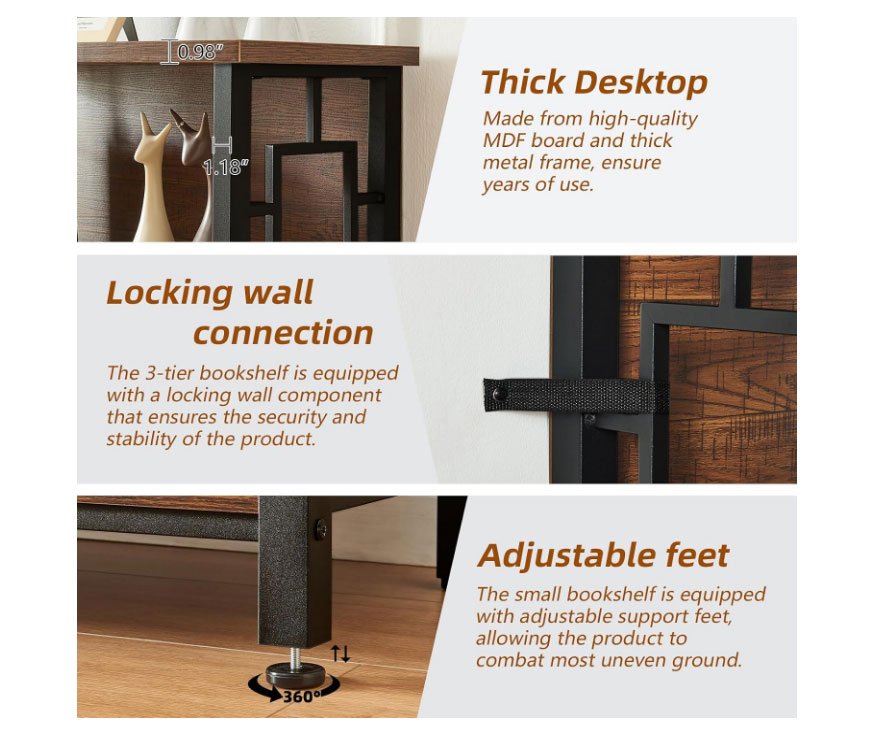
Before buying, check the dimensions, shelf capacity, assembly instructions, and whether the selected model includes an appropriate anti-tip kit.
5. Create a Small Reading Corner
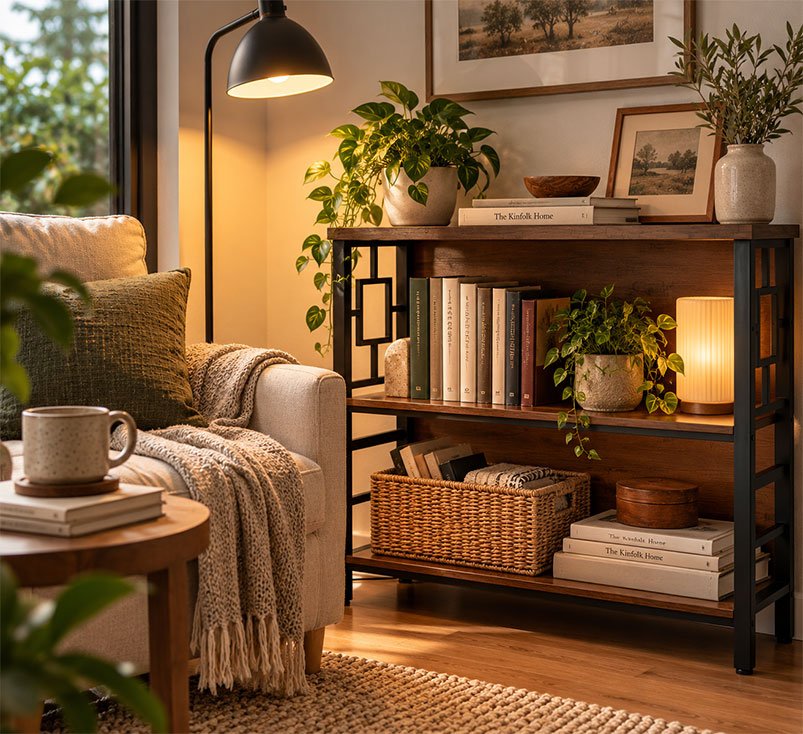
You don’t need an entire room to create a comfortable reading space.
Place a bookshelf beside a favorite chair, add a warm reading lamp, and keep a soft throw nearby. A small side table can provide space for a cup of tea or your current book.
Arrange your most frequently read books on the easiest shelves to reach.
Even a compact corner can become a pleasant place to slow down at the end of the day.
6. Make a Small Home Office More Functional
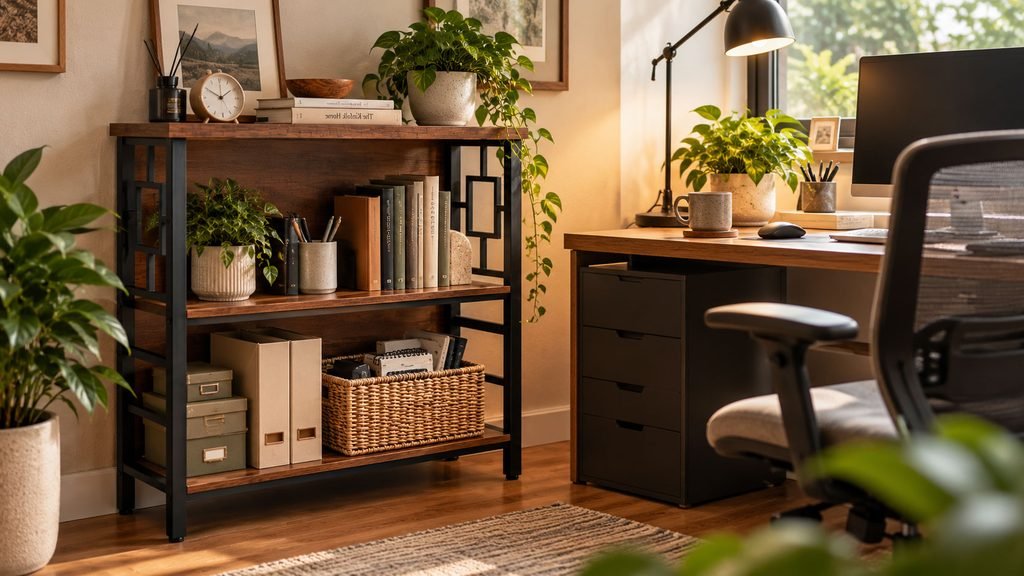
A bookshelf can help keep a home office organized without requiring a large filing cabinet.
Use lower shelves for notebooks, folders, paper supplies, and storage baskets. Keep frequently used reference books within easy reach, and reserve one shelf for a small plant or a decorative object.
If your desk is already crowded, a separate bookshelf can provide additional storage while keeping the work surface clear.
For a small workspace, measure the available floor area before choosing a shelf. Leave enough room to move your chair and access other furniture comfortably.
7. Combine Open Storage with Closed Bins
Open shelving looks attractive, but it can become visually busy when every item is exposed.
A simple solution is to combine books and decorative objects with a few opaque storage boxes or baskets.
Use open areas for things you enjoy seeing, and use containers for items you would rather keep out of sight.
This approach gives you the flexibility of open shelving without requiring everything to look perfectly arranged all the time.
8. Decorate with Personal Objects
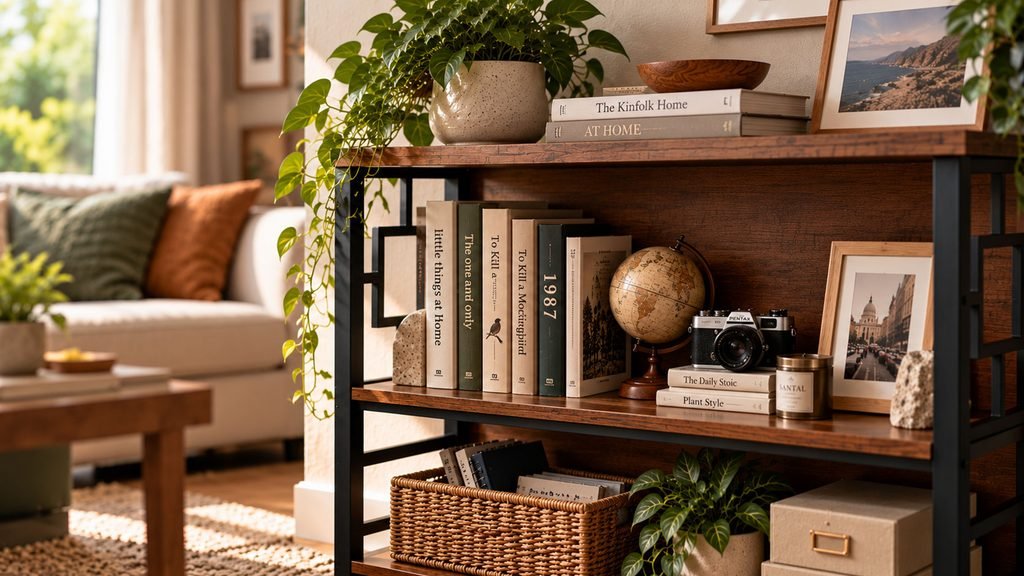
A bookshelf feels more interesting when it reflects the people who live in the home.
Consider displaying a small framed photograph, a travel souvenir, a favorite art print, or a meaningful object from a hobby.
You don’t need many pieces. Two or three carefully chosen items can make a shelf feel more personal than a collection of generic decorations.
Rotate these objects occasionally if you want the room to feel refreshed without buying anything new.
9. Use Vertical Space in Small Rooms
When floor space is limited, vertical storage can be a practical solution.
A compact bookshelf can make use of unused wall space while keeping books and everyday belongings accessible.
Before purchasing, measure the height and width available, including nearby doors, windows, and furniture. Also check that the shelf depth suits the items you intend to store.
For taller shelving units, follow the manufacturer’s anchoring instructions and secure the unit appropriately to help prevent tipping.
10. Keep the Color Palette Simple
A coordinated color palette can help a bookshelf blend naturally into the rest of your home.
For example, rustic brown shelves can pair nicely with cream, beige, black, muted green, and natural wood accents.
You don’t have to match everything exactly. Repeating two or three colors across books, baskets, and accessories is often enough to create a cohesive appearance.
If the rest of the room already has strong colors or patterns, keeping bookshelf accessories simple can help the space feel more balanced.
11. Leave Some Empty Space
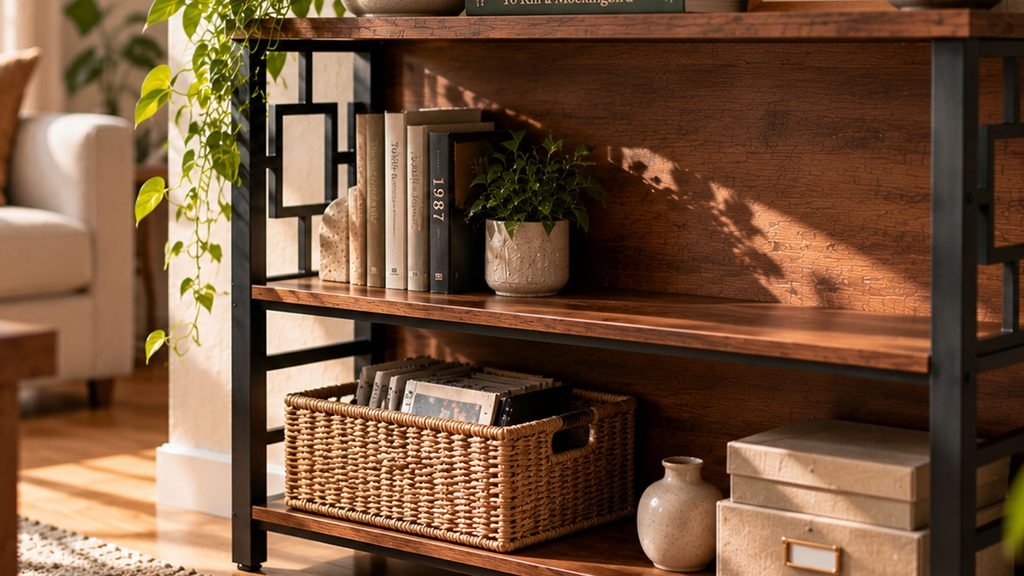
It’s tempting to fill every shelf, especially when storage is limited. However, leaving some areas open can make the entire arrangement feel less crowded.
Try grouping objects rather than spreading individual items across every shelf. Keep some books together, place a basket beside them, and leave a small open area nearby.
You can also use one shelf for storage and another for decorative items.
The best arrangement is one that looks comfortable while still making your everyday belongings easy to access.
How to Choose a Bookshelf for Your Space
Before purchasing a new bookshelf, consider a few practical details.
Size and dimensions: Measure your available floor space and check the shelf height, width, and depth. Make sure it fits comfortably alongside your existing furniture.
Storage needs: Think about whether you’ll store books, baskets, office supplies, plants, or a combination of items.
Materials and construction: Look at the frame, shelf materials, assembly requirements, and stated weight capacity. Follow the manufacturer’s instructions for distributing weight safely.
Stability: Check whether wall anchoring is recommended or required. Secure the bookshelf appropriately, especially in homes with children or pets.
Style: Choose a finish that complements your existing furniture. Rustic brown and black metal can suit a range of modern, industrial, and relaxed interiors.
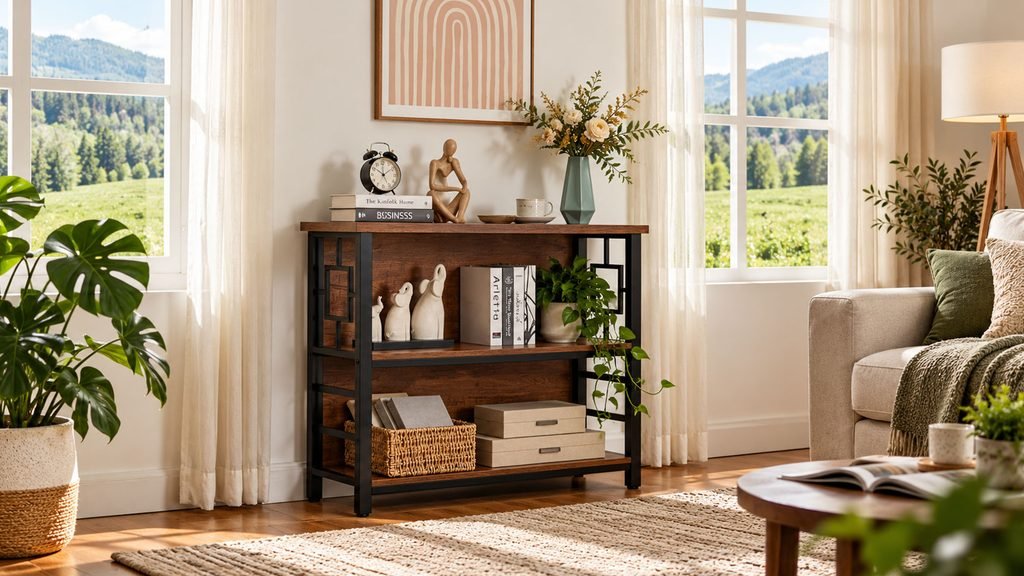
If you’re looking for an open shelving option, the HOMISSUE three-tier bookshelf is worth considering as one potential choice for a small living room, bedroom, or home office. Compare the available sizes and specifications before deciding whether it suits your needs.
As an Amazon Associate, I earn from qualifying purchases. This means I may earn a commission if you purchase through links in this article, at no extra cost to you.
A More Organized Home Can Start with One Shelf
You don’t need to redesign an entire room to make your home feel more organized. Sometimes, rearranging a bookshelf, adding a few baskets, or introducing a little greenery is enough to make a space feel more intentional.
Start with the items you already own, decide what you need to store, and leave room for the things you genuinely enjoy displaying.
A well-organized bookshelf should work for your everyday life first and look good along the way.
Read also: Simple Home Organization Ideas That Actually Help
Affiliate disclosure: This article contains affiliate links. As an Amazon Associate I earn from qualifying purchases.